Susuharai and Ōsouji: Why Japan Cleans Its Whole Life Before New Year
What is Susuharai?
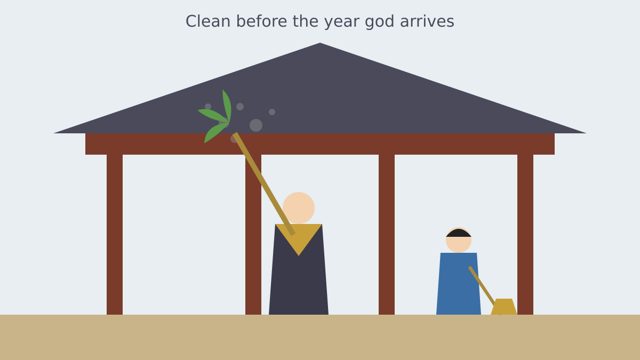
Every December, temples across Japan send monks up ladders with bamboo poles over ten meters long. They sweep a whole year of dust and soot from the giant roofs of their halls. At the same time, millions of Japanese households start ōsouji (大掃除), the "big cleaning": windows, ovens, closets, balconies, everything.
Susuharai (煤払い), "soot sweeping," is where this custom began. It's not spring cleaning. It's year-end cleaning, done to welcome a god into a clean home.
When is it in 2027?
Monday, December 13, 2027. December 13 is the traditional start of New Year preparations, called shōgatsu koto-hajime. Famous temples like Higashi Honganji and Nishi Honganji in Kyoto hold their soot sweeping around December 20. Most families do their ōsouji in the last week of the year.
Where it comes from
In old Japanese houses, cooking and heating used open fires, so soot built up on the beams and ceilings. Cleaning it off before New Year was a practical need.
But it was also sacred. At New Year, a god called Toshigami visits each home to bring a year of good harvest and luck. You wouldn't welcome an honored guest into a dirty house. In the Edo period, December 13 became the official soot-sweeping day at Edo Castle, and ordinary people followed.
What people in Japan do
- Clean the whole house from top to bottom: high places first, then floors, so the dust falls down.
- Clean the household altars (kamidana and butsudan) carefully.
- Throw away what's broken or unused before the year ends.
- Clean at work and school: students clean their classrooms; companies hold a final cleaning on the last working day.
- Avoid cleaning on certain days: cleaning after the 29th is thought to be rushed, and cleaning on New Year's Day might "sweep away" the luck that just arrived.
Five ideas hidden inside Susuharai
Bring Susuharai home
- Pick a day in mid-December to start, not the last minute.
- Make a list by room and do one area per day.
- Clean top to bottom: ceiling corners, lights, shelves, then floors.
- Let go of 10 things you don't use.
- Clean one "invisible" place: behind the fridge, inside the drawer, your computer desktop.
- Finish with the entrance (genkan): it's where luck enters.
Things that help with Ōsouji
FAQ
Why not spring cleaning? In Japan, the new year is the new start, so you clean before it.
Do I have to clean everything? No. Many people now pick a few key areas. The point is to welcome the year with a lighter heart.
What's next on the Japanese calendar
On December 22, 2027, the shortest day of the year, the Winter Solstice (Tōji), Japanese people take hot baths with yuzu citrus. Read that guide next.
Related guides: Zen and the Art of Cleaning · Shogatsu: Japanese New Year