Natsu Matsuri & Hanabi: Japan's Summer Festivals Were Born From Grief — and Turned Into Joy
What are Natsu Matsuri and Hanabi?
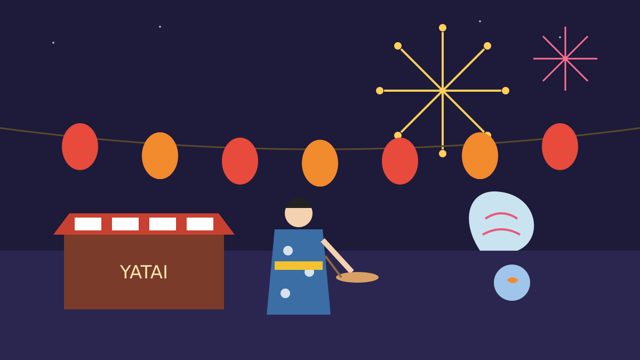
On hot summer evenings, Japanese towns transform. Paper lanterns glow over the streets. Food stalls sell grilled squid, shaved ice and fried noodles. Kids in cotton yukata scoop goldfish with paper nets, neighbors dance in circles around a wooden tower, and at night the sky explodes with fireworks while crowds call out "Tamaya!"
These are natsu matsuri (夏祭り), summer festivals, and hanabi (花火), fireworks — literally "fire flowers." They look like pure fun. Many of them began as something much more serious.
When are they in 2027?
From early July to late August 2027. Big ones include Kyoto's Gion Matsuri (all of July, main parades on July 17 and 24), Tokyo's Sumida River Fireworks (usually the last Saturday of July), and countless neighborhood festivals in between.
Where they come from
Summer in old Japan was dangerous. Heat, floods and humidity brought epidemics. Many festivals were created to calm angry spirits and pray against disease. Kyoto's Gion Matsuri, one of Japan's most famous, traces back to a ritual held in 869 during a plague.
Tokyo's fireworks have a similar story. In 1733, after a famine and epidemic, the shogun's government held a ceremony on the Sumida River to mourn the dead and drive away disease — and fireworks were set off. It's widely seen as the origin of Japan's great fireworks displays. Bon-odori dancing, held in midsummer, welcomes the spirits of ancestors home during Obon.
What people in Japan do
- Wear yukata, light cotton kimono, and wooden sandals (geta).
- Eat festival food: yakisoba noodles, takoyaki, grilled corn, candy apples, kakigōri shaved ice.
- Play festival games: goldfish scooping (kingyo-sukui), yo-yo balloon fishing, shooting galleries.
- Carry a mikoshi, a portable shrine, through the neighborhood, chanting.
- Dance bon-odori in a big circle, following simple, repeated moves anyone can learn.
- Watch fireworks from riverbanks, often after claiming a spot hours earlier.
- Light senkō hanabi, tiny hand-held sparklers, at home at the end of summer.
Five ideas hidden inside summer festivals
Bring a Japanese summer festival home
- Host a mini matsuri in a backyard or park: paper lanterns, a few festival foods and summer clothes.
- Make yakisoba or shaved ice with syrup.
- Learn one bon-odori dance from a video. "Tokyo Ondo" is a classic and easy.
- Light senkō hanabi together at the end of the night (where allowed), and watch the four stages in silence.
- Put your phone away for one firework show and just watch.
Things that help with Summer Festival
FAQ
Can tourists join bon-odori? Usually yes. Watch a round first, then join the circle.
Why do people shout "Tamaya!"? It was the name of a famous Edo-period fireworks maker. Shouting it became the traditional cheer.
What's next on the Japanese calendar
From August 13 to 16, Japan welcomes its ancestors home for Obon, with lanterns, cucumber horses and the year's biggest family gatherings. Read that guide next.
Related guides: Japan Travel Etiquette Cheat Sheet · Omiyage & Furoshiki: The Japanese Art of Gifting