Kagami Biraki: Why Japan "Opens" Its New Year Rice Cake Instead of Cutting It
What is Kagami Biraki?
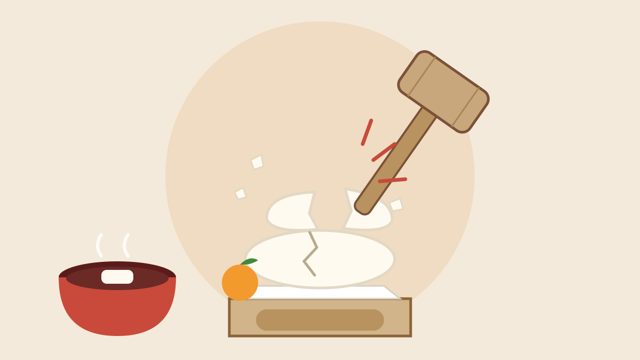
For the first days of the year, almost every Japanese home displays kagami mochi (鏡餅): two round rice cakes stacked like a snowman, topped with a small bitter orange. By mid-January the mochi is rock hard. On Kagami Biraki (鏡開き), "opening the mirror," families break it apart with a wooden mallet and cook the pieces into sweet red-bean soup or savory broth.
There is one strict rule: you never say you are cutting or breaking it. You are opening it.
When is it in 2027?
Monday, January 11, 2027 in most of Japan. Some regions, including parts of Kansai, do it on January 15 or 20.
Where it comes from
Round mochi are called "mirrors" because ancient bronze mirrors were round and sacred — one of the three imperial treasures is a mirror. During the New Year, the kagami mochi is the seat of the visiting New Year god.
The custom of breaking it grew in samurai households, who offered mochi before their armor and then shared it. It was once held on the 20th; a widely told story says the date moved to the 11th after the third Tokugawa shogun died on the 20th of a month, making that day unlucky. Because samurai would never speak of "cutting" anything that held good fortune, the word hiraku (開く, "to open") was used instead.
What people in Japan do
- Take down New Year decorations around this time.
- Break the mochi with a wooden mallet or by hand, never with a knife.
- Cook and eat it in oshiruko (sweet azuki soup) or ozoni. Nothing given to the god is thrown away.
- Martial arts dojos hold Kagami Biraki ceremonies to start the training year.
- At weddings and openings, "kagami biraki" also means smashing open the lid of a sake barrel with mallets, then serving everyone.
Four ideas hidden inside Kagami Biraki
Bring Kagami Biraki home
- Jan 11 — take down your holiday decorations in one go. Thank them as you pack them away.
- "Open" something. Break a big rice cake, a loaf of bread or a chocolate bar by hand and share it with everyone at home.
- Cook it into something warm. Sweet red bean soup with toasted mochi is the classic.
- Reframe one word. Pick one thing you're dreading this year and give it an "opening" name: not "the deadline" but "the launch"; not "the hard talk" but "the opening conversation."
Things that help with Kagami Biraki
FAQ
My mochi has mold. Can I still eat it? Don't. Food safety first. Many families now use mochi sealed in plastic inside the decoration for exactly this reason.
Why is there an orange on top? It's a daidai, a bitter orange whose name sounds like "generation after generation." It wishes the family will continue.
What's next on the Japanese calendar
Also on January 11, 2027 is Coming of Age Day, when Japan celebrates everyone who turned 20. Read that guide next.
Related guides: Mottainai: Zero-Waste Habits from Japan · Nemawashi: Get Buy-in Before the Meeting (the art of Japanese wording at work)