Koromogae: Why All of Japan Changes Clothes on the Same Day
What is Koromogae?
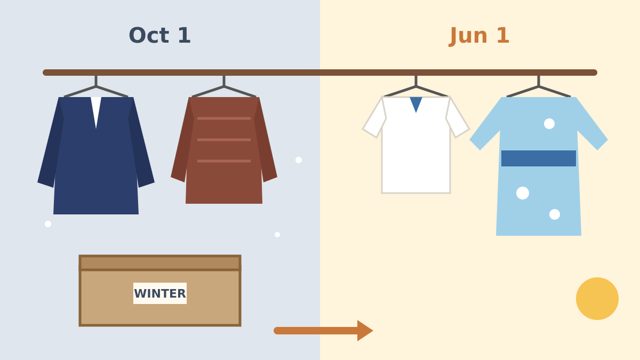
On June 1, something quietly remarkable happens in Japan. Millions of students arrive at school in white short-sleeved shirts instead of dark jackets. Train staff, police officers and bank tellers switch to summer uniforms. At home, families pull out boxes of summer clothes and pack the winter ones away.
This is Koromogae (衣替え), "changing clothes," and it happens again in reverse on October 1. A whole country agrees on the day the season changes — and dresses for it together.
When is it in 2027?
Tuesday, June 1, 2027 (summer), and Friday, October 1, 2027 (winter). Many schools allow a two-week transition period on either side.
Where it comes from
In the Heian imperial court, nobles changed their robes on the first day of the fourth month and the tenth month of the old calendar, a custom called kōi (更衣). In the Edo period, samurai followed a detailed schedule of four changes a year. When Japan modernized in the Meiji era, the government set June 1 and October 1 for official and military uniforms. Schools and companies followed, and the dates stuck.
In 2005 the government added a modern version: Cool Biz, a campaign that encourages office workers to skip ties and jackets in summer so air conditioners can be set higher. It began as an energy policy and changed Japanese office fashion.
What people in Japan do
- Switch school and work uniforms on June 1 and October 1.
- Swap home wardrobes: small Japanese homes often store off-season clothes in boxes or closets, so only one season is out at a time.
- Use the day to declutter: check for worn-out items, wash and store carefully, add insect repellent for wool.
- Change the house too: some families switch to lighter curtains, bamboo mats and summer bedding.
- Kimono follow strict seasonal rules: lined kimono most of the year, unlined in June and September, sheer fabrics in midsummer.
Five ideas hidden inside Koromogae
Bring Koromogae home
- Put two dates in your calendar: one at the start of your warm season, one at the start of your cold season.
- On the day, empty one closet and only put back what you'll wear in the coming season.
- Make three piles: keep, repair, let go. Donate the third pile the same week.
- Store the off-season clothes clean, folded and protected, in labeled boxes or vacuum bags.
- Switch one thing in your home: lighter bedding, a linen tablecloth, a cool-colored cushion. Make the season visible.
Things that help with Koromogae
FAQ
Is Koromogae a law? No. It's a convention followed by schools, uniforms and many families.
What if it's still cold on June 1? Schools usually allow a transition period. The date is a guide, not a rule against common sense.
What's next on the Japanese calendar
In June, as the rainy season begins, Japanese kitchens fill with green plums for Ume Shigoto, the yearly plum-preserving ritual. Read that guide next.
Related guides: Tokyo Small-Space Living: Storage Systems for Tiny Apartments · The Japanese Laundry System