Ōmisoka: 108 Bells, Long Noodles and the Art of Ending a Year Quietly
What is Ōmisoka?
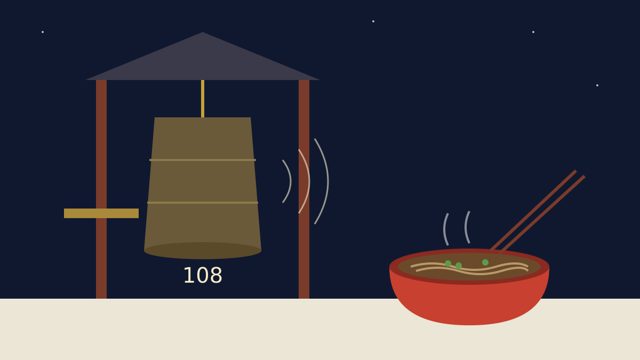
In many countries, New Year's Eve is loud: fireworks, countdowns, parties. In Japan, it is mostly quiet. Families gather at home, eat a bowl of buckwheat noodles, watch a famous TV singing contest, and then, just before midnight, listen to temple bells ringing slowly through the cold air. 108 times.
This is Ōmisoka (大晦日), the "great last day," the final day of the year.
When is it in 2027?
Friday, December 31, 2027.
Where it comes from
In the old lunar calendar, the last day of every month was called misoka ("the 30th"). The last one of the year was the great misoka. People stayed awake all night to welcome Toshigami, the god of the new year; sleeping early was said to make your hair turn white.
The bells, called joya no kane (除夜の鐘), come from Buddhism. Their 108 strokes are said to match the 108 bonnō, the earthly desires and troubles that disturb the mind: greed, anger, jealousy and so on. Each strike drives one away. Traditionally 107 are rung in the old year and the last one after midnight.
What people in Japan do
- Eat toshikoshi soba, "year-crossing noodles." Long noodles mean long life, and they break easily, so you "cut off" the year's troubles.
- Finish cleaning and decorating: the kadomatsu and kagami mochi must already be up.
- Watch Kōhaku Uta Gassen, the red vs. white team singing show that has aired since 1951.
- Listen to or ring the temple bells. Many temples let visitors strike the bell themselves.
- Make the first shrine visit (hatsumōde) just after midnight.
Five ideas hidden inside Ōmisoka
Bring Ōmisoka home
- Write down your year's "bonnō": the habits, worries or regrets you want to leave behind.
- Eat soba with a simple hot broth and green onions.
- Ring a bell (or bowl) 108 times with your family, taking turns.
- Spend the last hour quietly: no screens, just tea and conversation.
- Step outside at midnight and breathe the new year's first air.
Things that help with Ōmisoka
FAQ
Do Japanese people count down? Some do, especially at events in big cities. But most people at home welcome the year more quietly.
Is it OK to eat soba after midnight? Traditionally, finishing it before midnight is better, so you don't carry the old year's luck over.
What's next on the Japanese calendar
The cycle begins again: on January 1, Shōgatsu, the Japanese New Year, welcomes the year god home. Read that guide and start the year with Japan.
Related guides: Shogatsu: Japanese New Year · Zen Mind for Beginners