Nanakusa-gayu: Japan's Seven-Herb Porridge and the Art of the Built-In Reset
What is Nanakusa-gayu?
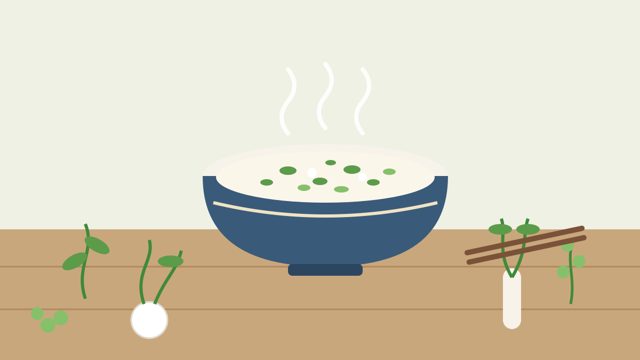
A week after New Year, after days of rich food and sweet black beans, Japanese families sit down to something almost plain: a bowl of soft rice porridge with seven chopped green herbs. It is called Nanakusa-gayu (七草粥), "seven-herb porridge." Supermarkets sell little packs of the seven herbs in the first days of January, and many families still eat it for breakfast on the 7th.
It is a tiny ritual with a big idea: a feast is only healthy if the recovery is part of the plan.
When is it in 2027?
Thursday, January 7, 2027 — traditionally eaten in the morning.
Where it comes from
January 7 is Jinjitsu (人日), "the day of people," one of Japan's five seasonal festivals (sekku). In ancient China, the first days of the year were each assigned to an animal, and the seventh to humans; people ate a soup of seven vegetables for health. In Japan this blended with wakana-tsumi, the old custom of picking the first young greens that push through the snow, believed to carry the strength of new life.
The seven herbs of spring are: seri (Japanese parsley), nazuna (shepherd's purse), gogyō (cudweed), hakobera (chickweed), hotokenoza (nipplewort), suzuna (turnip) and suzushiro (daikon radish). Japanese children learn the list like a little poem.
What people in Japan do
- Buy a nanakusa pack from the supermarket on January 6 or 7.
- Chop the herbs on the night of the 6th, traditionally tapping the board in rhythm while singing a short chant about chasing away birds from foreign lands — a folk charm against bad luck and crop pests.
- Cook the porridge in the morning, often with a little salt and nothing else.
- Eat it gently. It is breakfast, not a feast.
Four ideas hidden inside Nanakusa
Bring Nanakusa home
- Jan 6, evening — gather seven greens. You don't need the exact herbs. Use what you can find: parsley, watercress, arugula, baby spinach, turnip with leaves, daikon or radish with leaves, and pea shoots.
- Chop them together. Turn it into a family moment: each person chops one green and names one thing they want to be healthy for this year.
- Jan 7, morning — make the porridge. 1 cup cooked rice + 3 cups water, simmer 15–20 minutes until soft, stir in the greens for the last minute, salt lightly.
- Eat slowly, with nothing else. Notice how your body feels after a week of feasting.
- Pick one "plain day" a month. Put it in your calendar now. That's the habit Nanakusa teaches.
Things that help with Nanakusa
FAQ
Can I eat it for dinner? Yes. Morning is traditional, but the point is the gentle meal.
Is it a detox? Not in the medical sense. It's a light, warm meal after heavy ones — that's all it needs to be.
What's next on the Japanese calendar
On January 11, Japan breaks open the New Year rice cakes in a ritual called Kagami Biraki — and refuses to use the word "cut." Read that guide next.
Related guides: Ichiju Sansai: The Japanese Plate Formula · Hara Hachi Bu: A Guide to Mindful Eating