Nagoshi no Harae: Walk Through a Grass Ring and Leave Half the Year Behind
What is Nagoshi no Harae?
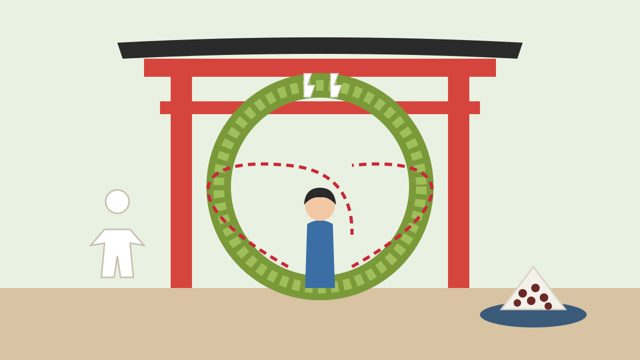
On the last day of June, many Shinto shrines put up a huge ring woven from green grass, taller than a person. Visitors walk through it in a figure-eight — left, right, then left again — bow, and walk on, feeling lighter. Some write their name on a small paper doll, breathe on it, and leave it at the shrine to carry away their bad luck.
This is Nagoshi no Harae (夏越の祓), "the purification for passing through summer." It marks the exact midpoint of the year: a chance to clear out the first six months before the second half begins.
When is it in 2027?
Wednesday, June 30, 2027. Many shrines set up the grass ring from mid-June until early July.
Where it comes from
Japan has two great purification days, written into court rituals more than a thousand years ago: one at the end of June and one on New Year's Eve. Both aim to wash away kegare — the accumulated impurity, stress and bad luck of daily life — so people can start fresh.
The grass ring, chi-no-wa (茅の輪), comes from an old legend. A god traveling in disguise asked two brothers for shelter. The rich brother refused; the poor brother, Somin Shōrai, welcomed him with what little he had. In thanks, the god gave him a small ring of grass to wear, and promised that his family would be protected from plague. The giant shrine ring is a version of that charm.
What people in Japan do
- Pass through the chi-no-wa in a figure-eight, often reciting a short prayer.
- Use a katashiro (形代), a paper doll: write your name and age, rub it on your body, breathe on it, and return it to the shrine.
- Eat minazuki (水無月) in Kyoto: a triangle of white rice jelly topped with sweet red beans.
- Review the first half of the year — some people use the day as a quiet midyear check-in.
Five ideas hidden inside Nagoshi no Harae
Bring Nagoshi no Harae home
- June 30 — make a small ring from grass, vines or even a paper circle, and step through it with your family: left, right, left.
- Write a midyear note: three things that went well in the first half, one thing to let go, one focus for the second half.
- Cut a paper doll, write the thing you're letting go on it, and recycle or safely burn it.
- Make a "cool" dessert: a simple sweet red bean jelly, or anything chilled, to welcome summer.
- Do one kind thing for a stranger this week. That's the original spirit of the ring.
Things that help with Nagoshi no Harae
FAQ
Can tourists walk through the grass ring? Yes. It's usually set up at the shrine entrance, free for everyone. Follow the sign showing the figure-eight route.
What happens to the paper dolls? The shrine purifies them in a ceremony, often by floating or burning them.
What's next on the Japanese calendar
On July 7, Japan hangs wishes on bamboo for Tanabata, the star festival of two lovers who meet once a year. Read that guide next.
Related guides: Kaizen for One: Personal Continuous Improvement Workbook · Osoji: The Japanese Year-End Deep Clean Checklist