Autumn Higan: Red Lilies, Sweet Rice and a Week for Crossing Over
What is Autumn Higan?
Twice a year, day and night are almost exactly equal. Japan treats both moments as holy. Around the autumn equinox comes Aki no Higan (秋彼岸), a seven-day week when families clean their ancestors' graves, offer sweets at the home altar, and eat sticky rice balls called ohagi.
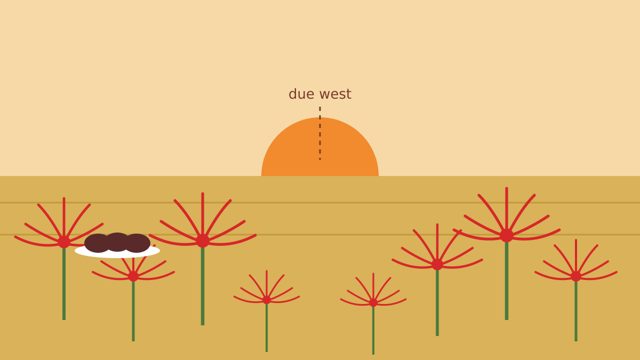
At the same time, along the edges of rice fields, a strange flower appears almost overnight: the bright red higanbana (red spider lily). For many Japanese people, those red flowers are the signal that autumn has begun.
When is it in 2027?
The equinox, Shūbun no Hi, is Thursday, September 23, 2027 (a national holiday). The Higan week runs from September 20 to 26: three days before, the equinox, and three days after.
Where it comes from
Higan means "the other shore." In Buddhism, our world of desire and suffering is "this shore," and enlightenment is the far side of a river. On the equinox, the sun sets due west — the direction of the Pure Land, Amida Buddha's paradise. People believed that on this day, the border between our world and the next was at its thinnest.
The custom is uniquely Japanese: it has been held since at least the early Heian period, and no other Buddhist country celebrates the equinoxes this way. Since 1948, the autumn equinox has been a national holiday "to respect ancestors and remember those who have died."
What people in Japan do
- Visit family graves: wash the stone, pull weeds, offer flowers, incense and water.
- Eat ohagi: sticky rice covered in sweet red bean paste. In spring it's called botamochi after the peony; in autumn it's ohagi after the bush clover (hagi).
- Make offerings at the butsudan, the home Buddhist altar.
- See the higanbana in famous spots like Kinchakuda in Saitama, where millions bloom at once.
Five ideas hidden inside Autumn Higan
Bring Higan home
- Watch the sunset on the equinox and notice where it sets: almost exactly due west.
- Make ohagi: cook glutinous rice, mash it lightly, roll into balls and cover with sweet bean paste.
- Set out a photo of someone you've lost with a flower and a small sweet.
- Tidy one place that holds memories: a drawer, a box of photos, or a grave if you can visit.
- Find your balance: list what you have too much of and too little of right now.
Things that help with Higan
FAQ
Is Higan sad? Not really. It feels more like a gentle family reunion than a funeral.
Can I give higanbana as a gift? Better not. Because they grow near graves, many Japanese people link them with death. Admire them in the field instead.
What's next on the Japanese calendar
From October to early December, Japan's mountains turn red and gold. Momijigari, "autumn leaf hunting," is the season's great outing. Read that guide next.
Related guides: Japanese Buddhism for Beginners · Wagashi: Japanese Sweets by Season